
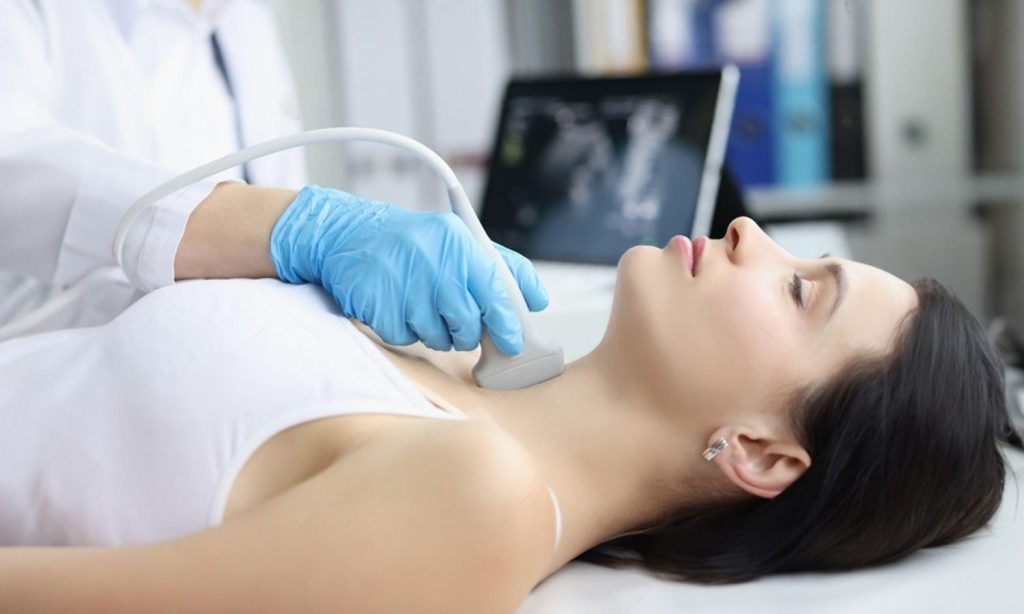
Thyroid ultrasound is a non-invasive imaging technique used to visualize the thyroid gland, located in the neck, to assess its size, structure, and any abnormalities. Here’s an overview of its key aspects:
Purpose
- Nodule Evaluation: Identifies and characterizes thyroid nodules, which can be benign or malignant.
- Thyroid Size Assessment: Measures the overall size of the thyroid gland and checks for enlargement (goiter).
- Cyst Detection: Differentiates between solid and cystic nodules.
- Guiding Biopsy: Assists in guiding fine needle aspiration (FNA) biopsies of suspicious nodules.
How It Works
- Sound Waves: A transducer emits high-frequency sound waves that reflect off the thyroid tissue, creating images on a monitor.
- Real-time Imaging: Provides dynamic images that can be assessed immediately.
Types of Thyroid Ultrasound
- Standard Ultrasound: Used for general evaluation of the thyroid gland.
- Doppler Ultrasound: Evaluates blood flow in the thyroid and surrounding structures, which can help assess conditions like thyroiditis or hyperthyroidism.
Benefits
- Non-invasive: No need for surgery or radiation exposure.
- Safe: Suitable for all patients, including pregnant women and children.
- Quick Procedure: Usually takes 15-30 minutes and can be performed in an outpatient setting.
Limitations
- Operator Dependency: Quality of images and interpretations can vary based on the technician’s experience.
- False Positives/Negatives: Not all nodules require intervention, and further testing may be needed to confirm results.
Conclusion
Thyroid ultrasound is a valuable tool in diagnosing and managing thyroid conditions. It provides crucial information about the structure and function of the thyroid gland, helping healthcare providers determine appropriate treatment options for conditions like hypothyroidism, hyperthyroidism, and thyroid cancer. Regular monitoring through ultrasound can also help track changes over time.